The Body & Mind Series: The Emotional Reality of PMOS (PCOS)
Welcome to the Body & Mind Series! Over the next several posts we’ll be diving deep into the connection between physical health and how can greatly impact your mood, ability to tolerate stress, and even shape your perspective. Today we focus on Polycystic Ovary Syndrome (PCOS), renamed just this past year to Polyendocrine metabolic ovarian syndrome (PMOS). Since this is a recent terminology change, I’ll be using both PCOS and PMOS interchangeably. This disorder can interfere with mood in ways that can feel mysterious and confusing even on a good day. PMOS is estimated to impact 26% of women worldwide [1] - that’s nearly 1 in 4 women! But how exactly can a health problem impact our mind and what can we do about it?
A quick note before we dive in: I'm a mental health professional, not a physician. This post focuses on the emotional and psychological side of PCOS, not the medical ins and outs of a very complex disorder. If you're looking for answers about your specific symptoms or treatment options, contact your primary care doctor or you can find resources at PCOSAA. But if you're wondering whether or how PMOS has been messing with your mood, you're in the right place.

Photo by Ken Cheung
Key Takeaways
PMOS (formerly known as PCOS) affects your mood, not just your body. Hormone shifts can drive mood swings, irritability, and brain fog.
Depression shows up in up to 55% of people with PMOS. If your mood has felt off, it's not just in your head.
Recent research also links PMOS to a much higher suicide risk. You're not overreacting, and you're not alone in this.
Coping skills like DBT self-soothe can help you get through a hard moment. Working with a therapist can help you build support that lasts longer than the moment.
PCOS Is Much More Than a Physical Diagnosis
Oftentimes when we hear PMOS come up in conversations, we usually hear about the physical effects. Irregular periods, body weight fluctuations, the skin changes, or fertility concerns. Each being challenging to navigate on their own. But oftentimes mood is left out of that conversation, despite “mood disruptions” being listed as a common symptom. It can maybe feel like an exaggeration or coincidence when we talk about mood swings, increased irritability, or even suicide ideation as related to or because of PMOS. In turn this can feel extra isolating or like it’s “just a me problem” rather than due to a complex body system issue. You’re not alone and your mood can be greatly affected by the hormone and metabolic shifts experienced in PCOS.
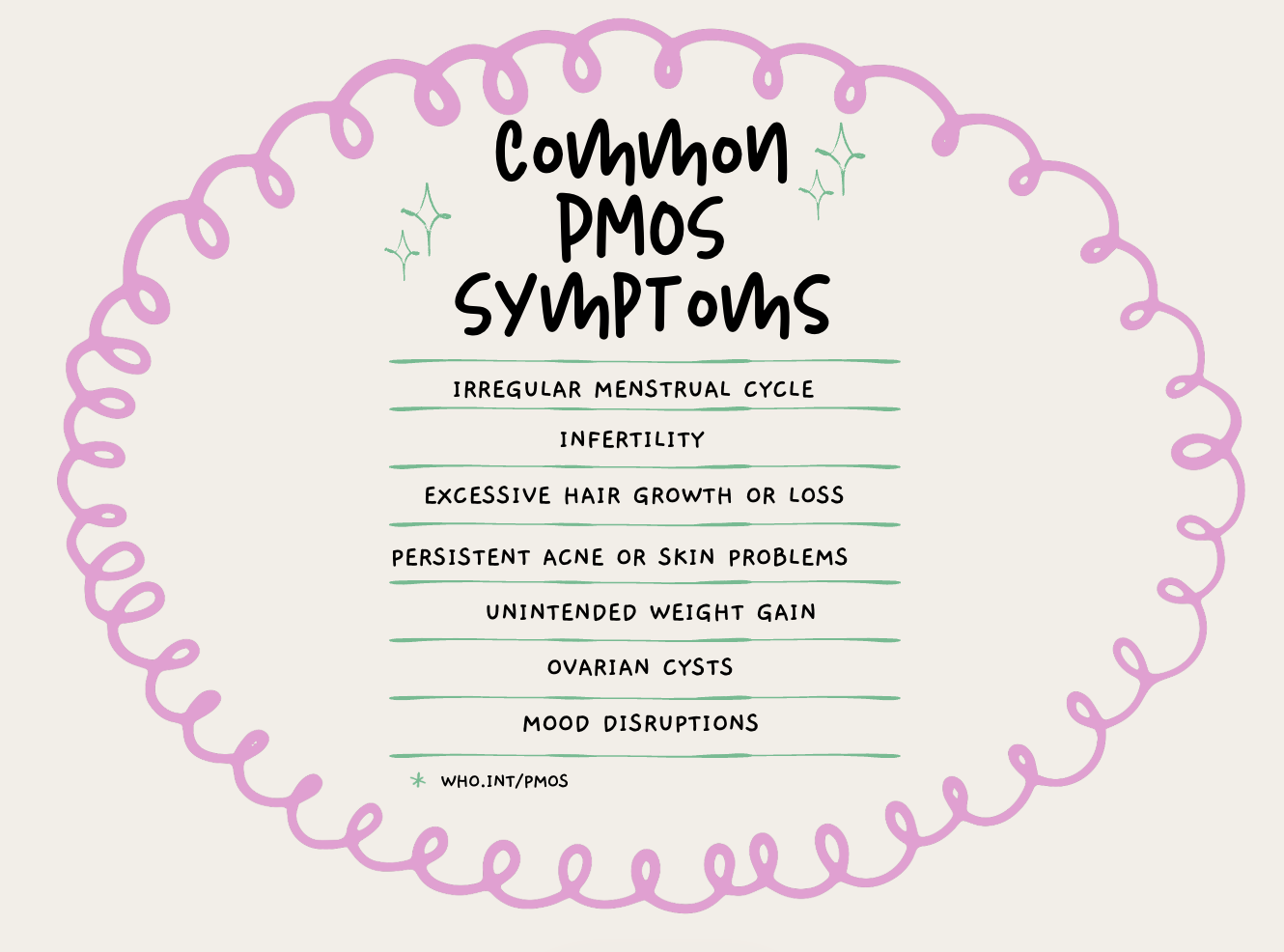
The Emotional Reality of PCOS
Hormone shifts are thought to be the primary reason behind mood and emotion regulation changes in PMOS. These hormonal shifts can contribute to:
Mood swings: Sudden fluctuations in hormones may result in unpredictable mood changes in a short span of time.
Irritability: High androgen levels can affect brain function e.g making decisions, paying attention and mood regulation. Regulation meaning the ability to control what we do with the emotion we’re experiencing.
Research consistently demonstrates increased levels of anxiety and depression in women with PMOS when compared to women without. In fact, the rate of depression associated with PMOS is reported as high as 55% [2]. Symptoms of depression can present like having a low mood, lack of interest, fatigue, difficulty sleeping, increased or decreased appetite, thoughts of suicide, and trouble concentrating. However you might also experience brain fog, irritability, and/or a general sense of feeling on edge or as though something is wrong.
Where it gets tricky is that living with a chronic health condition is already stressful. Consistently having to navigate body changes, fertility problems, chronic discomfort and pain is taxing on the mind and body. Not to mention facing medical stigma and having to advocate for your needs to not be dismissed by medical professionals. All of this impacts our ability to regulate emotions in the moment which can have consequences on our relationships, home, work, and how we think of ourselves within them.
Is PCOS Linked to Suicide Risk?
Recent research has begun to explore the connection between suicide ideation and PMOS, in 2024 a study of women with PCOS found a nearly 8-fold increased risk of suicide in comparison to non-PCOS groups [3]. There is still much to be examined and explored as to what the underlying link is between suicide risk and PMOS. However there is a consistent pattern between those living with chronic health conditions and an elevated suicide risk, including PCOS. Managing complex health disorders can be exhausting and lonely, if suicidal thoughts are something you experience reach out to your providers or consider using resources such as 988 Lifeline.

Photo by simon
How to Manage Mood and Mental Health with PCOS
Your first step is identifying and tracking your mood along with all other symptoms you might experience. This can be as straight forward as using the notes app on your phone or you can try out mood tracking apps such as How We Feel. By tracking changes you might find new information that better supports building healthy habits or reducing symptom severity.
DBT: Self Soothe
Maybe you’re already in a flare up and need a way to work your emotions down (or at least not make them worse). Self soothing, a distress tolerance strategy in dialectical behavioral therapy, can offer some physical comfort that in turn can reduce the intensity of what you feel. To practice, you start by identifying each of the senses: sight, sound, touch, taste, and smell. Notice which one might stand out first and from there work your way through each of the 5 senses.
Sight
Noticing if light sensitivity is worsening mood, brighten or dim lights nearby.
Using a positive example to distract, such as looking at picture of someone you love e.g. partner, a pet.
Sound
Notice whether environment sounds are helping or harming, moving someplace quiet or turning on music.
Taste
Something to eat or drink that might bring comfort.
Smell
Noticing how smells might be contributing to your emotions e.g. opening a window in a musty room, lighting a candle.
Touch
Paying attention to temperature, would cooling down or warming up feel better?
Adding pressure to painful areas can sometimes over comfort, such as using a weighted blanket or practicing techniques like self hugging.
Final Thoughts
Living with a chronic health condition is complex, challenging, and changes day by day. Coping techniques aren’t enough to weather all the things that come with living life with PMOS. Help and support can look a lot of different ways; mental health therapy, seeking community, and building a team of trustworthy medical professionals are all possible avenues to building a life where PMOS doesn’t take up all the space. Check out the resource list below for help in getting started.
Additional Resources
About the Author
Eleanor Raker, LPCC, is a licensed mental health counselor based in Cincinnati, OH. Eleanor is the founder and owner of Cerebella Integrative Counseling. She works with clients navigating complex trauma and who deal with chronic emotion dysregulation. She helps clients who are ready to move past crisis-stage coping into deeper relational and attachment-focused work. Drawing on DBT, EMDR, and somatic therapy, she helps clients analyze and reconstruct old, destructive patterns and work towards a life that feels sustainable, authentic, and truly their own.
If you're curious whether this kind of work could help you, reach out to schedule a consultation.
References
[1] Shukla, A., Rasquin, L. I., & Anastasopoulou, C. (2025). Polyendocrine metabolic ovarian syndrome. In StatPearls. StatPearls Publishing. https://www.ncbi.nlm.nih.gov/sites/books/NBK459251/
[2] P. Dybciak, D. Raczkiewicz, E. Humeniuk, T. Powrózek, M. Gujski, T. Małecka-Massalska, A. Wdowiak, I. Bojar Depression in Polycystic Ovary Syndrome: a Systematic Review and Meta-Analysis J. Clin. Med., 12 (20) (2023), p. 6446, 10.3390/jcm12206446
[3] Hsu, T. W., Kao, Y. C., Tsai, S. J., Bai, Y. M., Su, T. P., Chen, T. J., Liang, C. S., & Chen, M. H. (2024). Suicide attempts after a diagnosis of polycystic ovary syndrome: A cohort study. Annals of Internal Medicine, 177(3), 335–342. https://doi.org/10.7326/M23-2240
[4] S. Alur-Gupta, A. Dokras. Considerations in the Treatment of Depression and anxiety in Women with PCOS. Semin. Reprod. Med., 41 (01/02) (2023), pp. 037-044, 10.1055/s-0043-1777720