DBT for Complex Trauma: What It Is and How It Helps
Welcome! If you're living with the daily effects of complex trauma and searching for a therapy approach that can actually meet you where you are, you're in the right place. Finding the right kind of support can feel like an exhausting, uncertain process, especially when past experiences have made trust hard to come by. This guide is here to help you understand what Dialectical Behavioral Therapy (DBT) can offer, so you can make an informed decision about your care.

Photo by Eugene Golovesov
What Is Dialectical Behavioral Therapy (DBT)?
Dialectical Behavioral Therapy (DBT) is a talk therapy approach developed by psychologist Marsha Linehan in the 1970s. Originally created to treat individuals with borderline personality disorder and chronic suicidal ideation, DBT has since become widely used to help people who struggle with intense, hard-to-regulate emotions, self-destructive behaviors, and difficulty maintaining stable relationships. Built on the foundation of cognitive behavioral therapy (CBT), DBT adds a unique element: the concept of dialectics. To think dialectically means learning how to hold two seemingly contradictory truths at once, like accepting yourself exactly as you are while also committing to change.
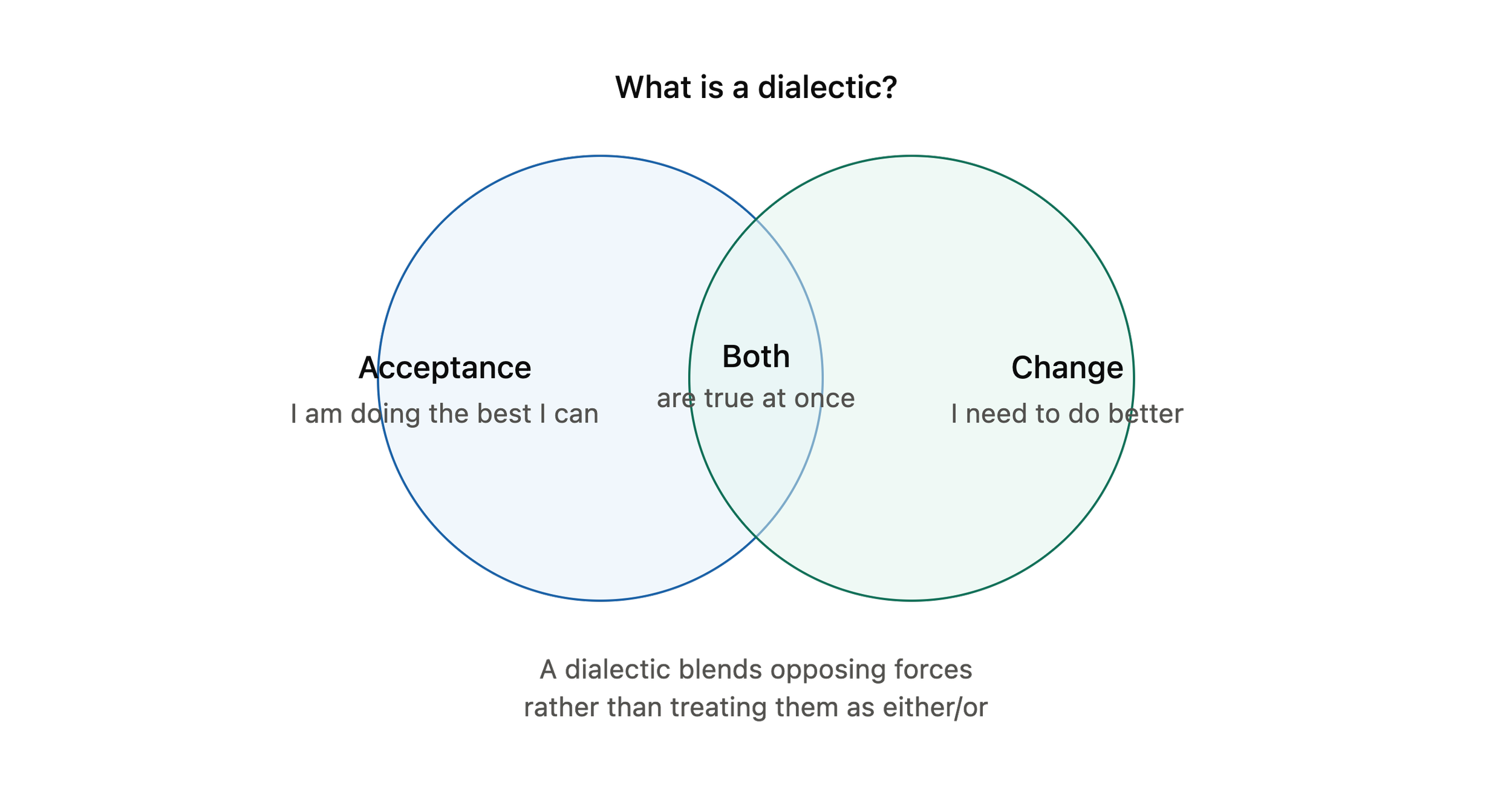
Creating this balance is often especially meaningful for those with a trauma history. Living with complex trauma can often feel like you’re pulled between wanting things to be different but also feeling like change isn't safe or possible. DBT addresses this by combining acceptance-based strategies (like mindfulness and distress tolerance) with change-based strategies (like emotion regulation and interpersonal effectiveness). This balanced approach can then help build a life that feels both manageable and worth living, without having to choose between honoring your lived experiences and moving forward towards the life you want.
Comprehensive vs. DBT-informed
In your search, you may have come across the terms “Comprehensive DBT" or "DBT-informed” and wondered what the distinction actually means for your care. Understanding the difference can help you find the right level of support for where you are right now.
Comprehensive DBT refers to Marsha Linehan's original model and involves four core components: individual therapy, group skills training, phone coaching, and a clinical consultation team for the therapist. In practice, this means weekly individual sessions, weekly group skills training, and access to your therapist by phone for in the moment skills coaching between sessions. Comprehensive DBT is most often found in larger treatment centers offering intensive outpatient programs (IOP) or partial hospitalization programs (PHP).
DBT-informed therapy means a therapist incorporates DBT skills and concepts into treatment without delivering all four components required to be considered comprehensive DBT. In other words, a DBT-informed therapist may teach you skills like distress tolerance or emotion regulation, but blend them with other therapeutic approaches rather than running a full DBT program. This approach is more common in outpatient settings, often after someone has completed a more intensive program or alongside other types of therapy.

Photo by Artem Stoliar
Does DBT help with complex trauma?
Yes, it absolutely can. Research supports the use of DBT skills to help manage the difficult emotions that often surface while processing trauma. Learning to regulate overwhelming feelings, tolerate distress, and set healthy boundaries builds the stability needed to do deeper trauma work. For many people, DBT serves as a strong foundation before or alongside trauma-focused therapies like EMDR and somatic therapy. This structured approach can be especially helpful if you've felt like therapy in the past was too abstract, or if you want additional support like homework you can practice between sessions.
But what could treatment look like really? Maybe you grew up needing to read the room before you could read yourself. Saying no felt really risky, so you learned to agree, accommodate, and keep the peace even if it cost you. Maybe now you struggle to know what you actually want or feel okay about saying it to others because your needs got buried a long time ago. Or maybe your struggle isn't in relationships, but with your own inner voice. You grew up in a home where mistakes weren't tolerated, so you learned to criticize yourself before anyone else could. Now even small setbacks send you into a spiral of shame. Therapy would start by building foundational skills such as: learning to name what you're experiencing, notice the that inner voice without automatically believing it, and asking for what you need in relationships. Once that foundation is in place, trauma-focused work like EMDR can help you process where these patterns first took root and help you build lasting change.
Is DBT a good fit for me?
Deciding which approach best works for you is an individual choice based on what you most want to get out of treatment. That said, Dialectical Behavior Therapy (DBT) tends to be a strong fit for people looking for practical, skills-based tools to manage intense emotions, reduce conflict in relationships, and build a life that feels more balanced day to day. DBT is often recommended for those struggling with emotional dysregulation, anxiety, depression, borderline personality disorder, complex trauma/PTSD, or patterns of impulsive behavior that have been hard to shift through talk therapy alone.
The relationship with your therapist continues to be by far the main factor research has shown to be effective in whether treatment works. If you’re unsure of which approach might be best for you, consult with a therapist who can assess your needs and help you decide which direction makes the most sense for you.
Click here to learn more about Cerebella Integrative Counseling